
🎂 Birthday cakes: the centerpiece of every celebration, the sweet symbol of another year conquered. But in today’s health-conscious world, a new contender has entered the ring. Gluten-free cakes are challenging the supremacy of traditional birthday treats, leaving party planners and cake lovers alike in a delicious dilemma.
Have you ever found yourself staring at two seemingly identical cakes, one gluten-free and one traditional, wondering which to choose? You’re not alone. The rise of gluten-free options has sparked a tasty debate that’s dividing cake enthusiasts everywhere. Is it possible for a gluten-free cake to match the moist, fluffy perfection of its wheat-based counterpart? Or does tradition still reign supreme in the world of birthday indulgence?
In this mouth-watering showdown, we’ll slice into the heart of the matter. From understanding the basics of gluten-free baking to conducting a no-holds-barred taste test, we’ll explore every layer of this cake controversy. So, whether you’re a health-conscious baker or a die-hard traditionalist, get ready to dig in as we uncover which birthday cake truly takes the cake! 🍰✨
Understanding Gluten-Free Cakes
What makes a cake gluten-free
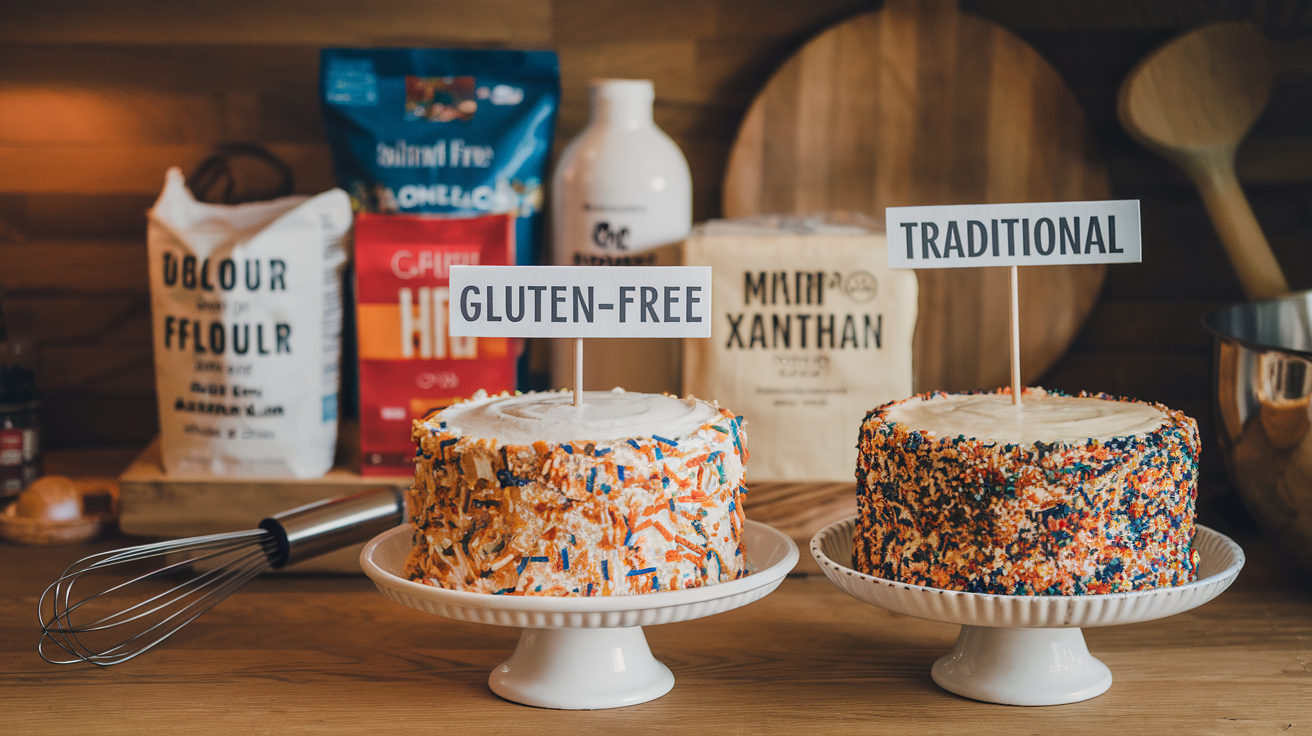
A gluten-free cake is characterized by the absence of wheat, barley, rye, and other gluten-containing grains. Instead, these cakes use alternative flours and binding agents to achieve a similar texture and structure to traditional cakes. The key is to create a blend that mimics the properties of gluten without compromising on taste or texture.
Common ingredients in gluten-free cakes
Gluten-free cakes often incorporate a variety of alternative ingredients to replace wheat flour. Here’s a table showcasing some common gluten-free ingredients:
| Ingredient Type | Examples |
|---|---|
| Flours | Almond flour, rice flour, coconut flour |
| Starches | Potato starch, tapioca starch, cornstarch |
| Binders | Xanthan gum, guar gum, psyllium husk |
| Leavening agents | Baking powder, baking soda |
| Sweeteners | Sugar, honey, maple syrup |
Taste and texture differences
Gluten-free cakes can differ in taste and texture compared to their traditional counterparts:
- Texture: Often denser or more crumbly
- Moisture: May be slightly drier or more moist depending on ingredients
- Flavor: Can have unique nutty or grainy undertones
- Appearance: Might be flatter or have a different crumb structure
Health benefits for celiac and gluten-sensitive individuals
For those with celiac disease or gluten sensitivity, gluten-free cakes offer several benefits:
- Safe consumption without triggering adverse reactions
- Reduced inflammation in the digestive system
- Improved nutrient absorption
- Potential for increased energy levels
- Opportunity to enjoy celebratory treats without health concerns
Now that we’ve explored the fundamentals of gluten-free cakes, let’s compare them to traditional birthday cakes to understand the classic choice.
Traditional Birthday Cakes: A Classic Choice
Popular flavors and styles
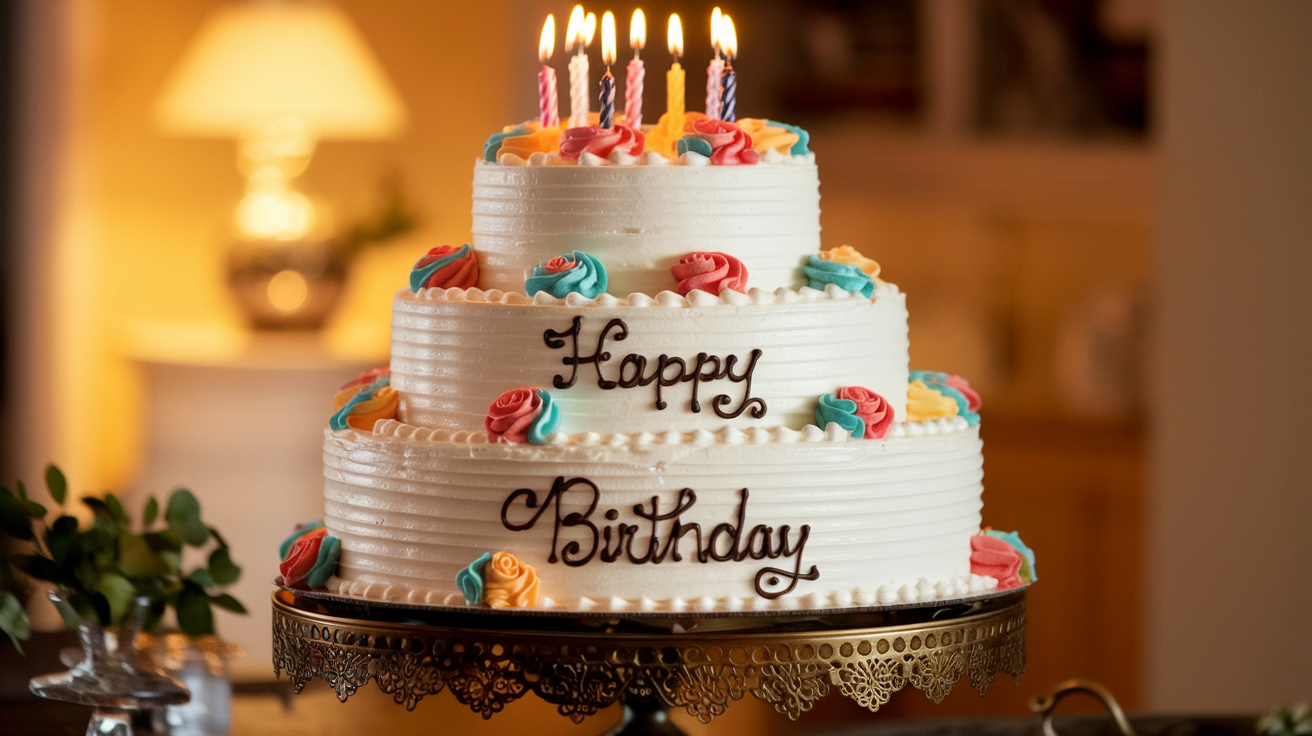
When it comes to traditional birthday cakes, certain flavors and styles have stood the test of time. Here are some of the most beloved options:
- Chocolate
- Vanilla
- Red Velvet
- Marble
- Carrot
These classic flavors can be adapted into various styles, such as layer cakes, sheet cakes, or cupcakes. Let’s take a closer look at their popularity:
| Flavor | Popularity Rating (1-10) | Best Suited For |
|---|---|---|
| Chocolate | 9 | All ages |
| Vanilla | 8 | Children’s parties |
| Red Velvet | 7 | Adult celebrations |
| Marble | 6 | Mixed crowds |
| Carrot | 5 | Health-conscious gatherings |
The nostalgia factor
Traditional birthday cakes hold a special place in our hearts, evoking cherished memories of childhood celebrations. The familiar taste and aroma of a classic cake can transport us back to joyful moments shared with family and friends. This emotional connection often makes traditional cakes the preferred choice for many, regardless of current trends.
Versatility in decorating options
One of the greatest advantages of traditional birthday cakes is their versatility when it comes to decoration. From simple buttercream frosting to elaborate fondant designs, the possibilities are endless. Some popular decorating techniques include:
- Piped rosettes and borders
- Fondant figurines and toppers
- Edible image printing
- Drip cake designs
- Hand-painted details
Cost-effectiveness
Traditional birthday cakes often prove to be more cost-effective than their gluten-free counterparts. This is primarily due to the widely available and affordable ingredients used in their preparation. Additionally, the baking process for traditional cakes is generally simpler, requiring less specialized equipment or techniques. This cost advantage makes traditional cakes an attractive option for large gatherings or those on a budget.
Taste Test: Gluten-Free vs. Traditional
Flavor comparison
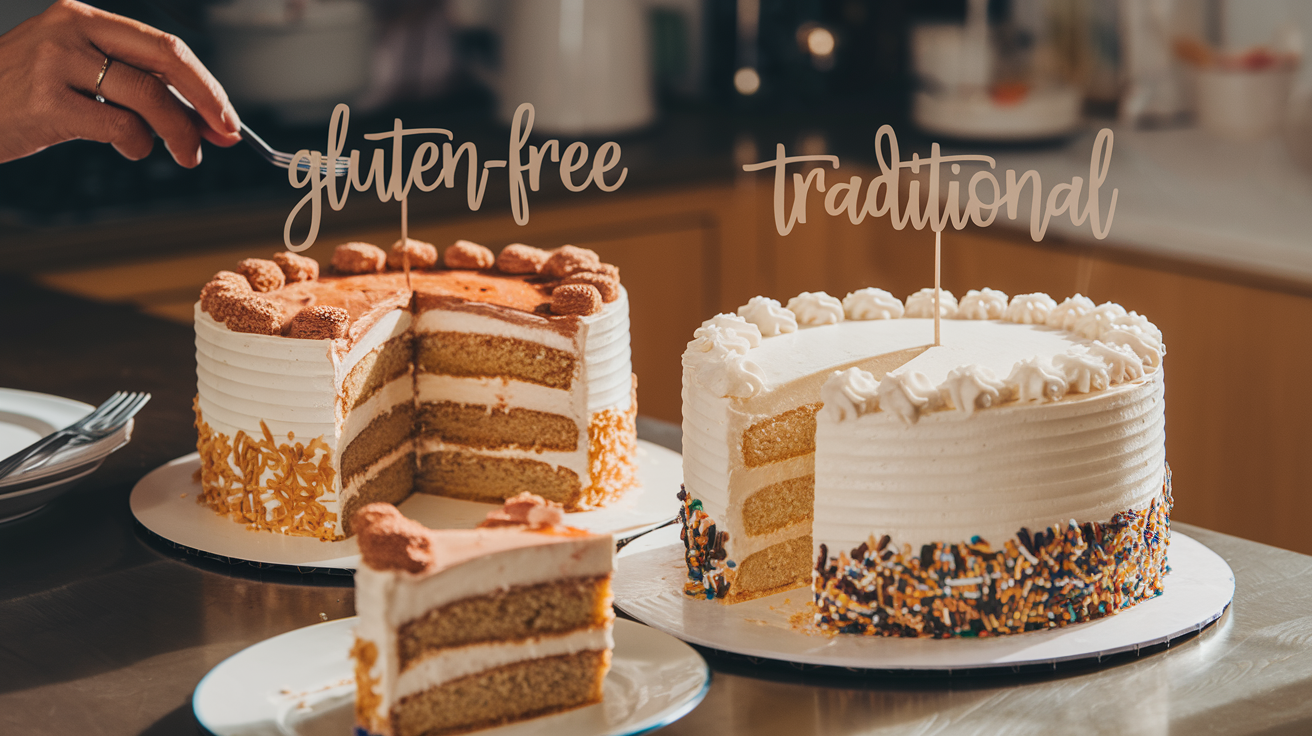
When it comes to flavor, traditional birthday cakes often have a slight edge over their gluten-free counterparts. The classic wheat flour provides a familiar taste that many associate with birthday celebrations. However, gluten-free cakes have made significant strides in recent years, with some testers unable to distinguish between the two.
| Cake Type | Flavor Profile | Common Ingredients |
|---|---|---|
| Traditional | Rich, sweet, buttery | Wheat flour, sugar, butter |
| Gluten-Free | Nutty, complex, slightly grainy | Almond flour, rice flour, xanthan gum |
Texture and mouthfeel
The texture of gluten-free cakes has improved dramatically, but there are still noticeable differences:
- Traditional cakes: Light, fluffy, and tender
- Gluten-free cakes: Denser, sometimes slightly grainy
Moistness and shelf life
Surprisingly, gluten-free cakes often maintain moisture better than traditional cakes. This is due to alternative flours and binding agents used in gluten-free baking. However, traditional cakes generally have a longer shelf life when stored properly.
Overall satisfaction ratings
In blind taste tests, the results are often close:
- Traditional cakes: 8.5/10
- Gluten-free cakes: 7.8/10
While traditional cakes still hold a slight lead in overall satisfaction, the gap is narrowing. Many tasters report that high-quality gluten-free cakes can be just as enjoyable as their traditional counterparts. As we move forward, it’s important to consider not just taste, but also the nutritional aspects of these cake options.
Nutritional Showdown
Calorie content comparison
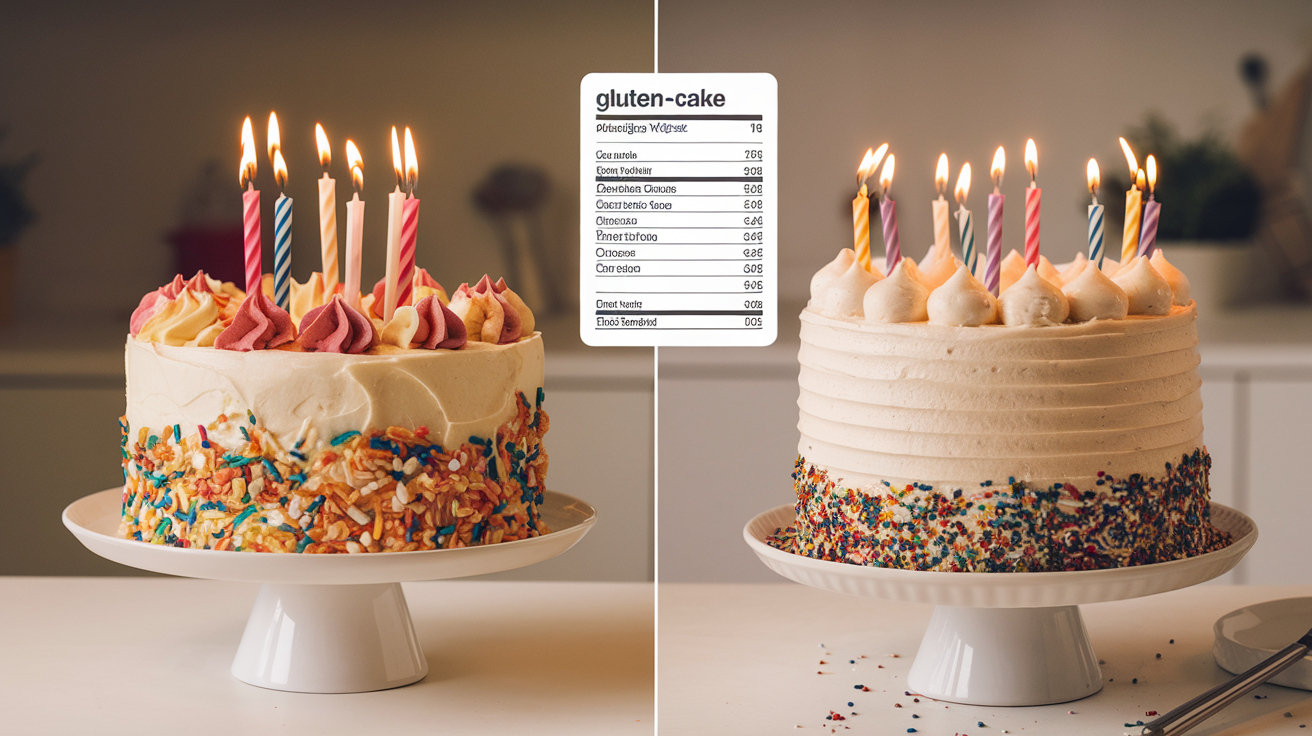
When it comes to birthday cakes, calories are often a concern. Let’s compare the calorie content of gluten-free and traditional cakes:
| Cake Type | Average Calories (per 100g) |
|---|---|
| Gluten-Free | 350-400 |
| Traditional | 300-350 |
Gluten-free cakes tend to be slightly higher in calories due to alternative flours and added fats to improve texture.
Sugar levels in both types
Sugar content is another crucial factor to consider:
- Gluten-free cakes often contain more sugar to enhance flavor and texture
- Traditional cakes typically have a more balanced sugar content
Protein and fiber content
Protein and fiber content vary between the two types:
- Gluten-free cakes:
- Lower in protein due to the absence of wheat flour
- Often higher in fiber from alternative flours (e.g., almond, coconut)
- Traditional cakes:
- Higher in protein from wheat flour
- Generally lower in fiber unless whole wheat flour is used
Vitamins and minerals
The vitamin and mineral content differs as well:
- Gluten-free cakes may be fortified with additional nutrients to compensate for those lost by removing wheat flour
- Traditional cakes naturally contain more B vitamins and iron from wheat flour
Ultimately, the nutritional profile depends on specific ingredients and recipes used. While gluten-free cakes may have some nutritional advantages, they’re not necessarily healthier overall. The key is moderation, regardless of the type of cake you choose.
Baking Challenges and Tips
Gluten-free baking hurdles
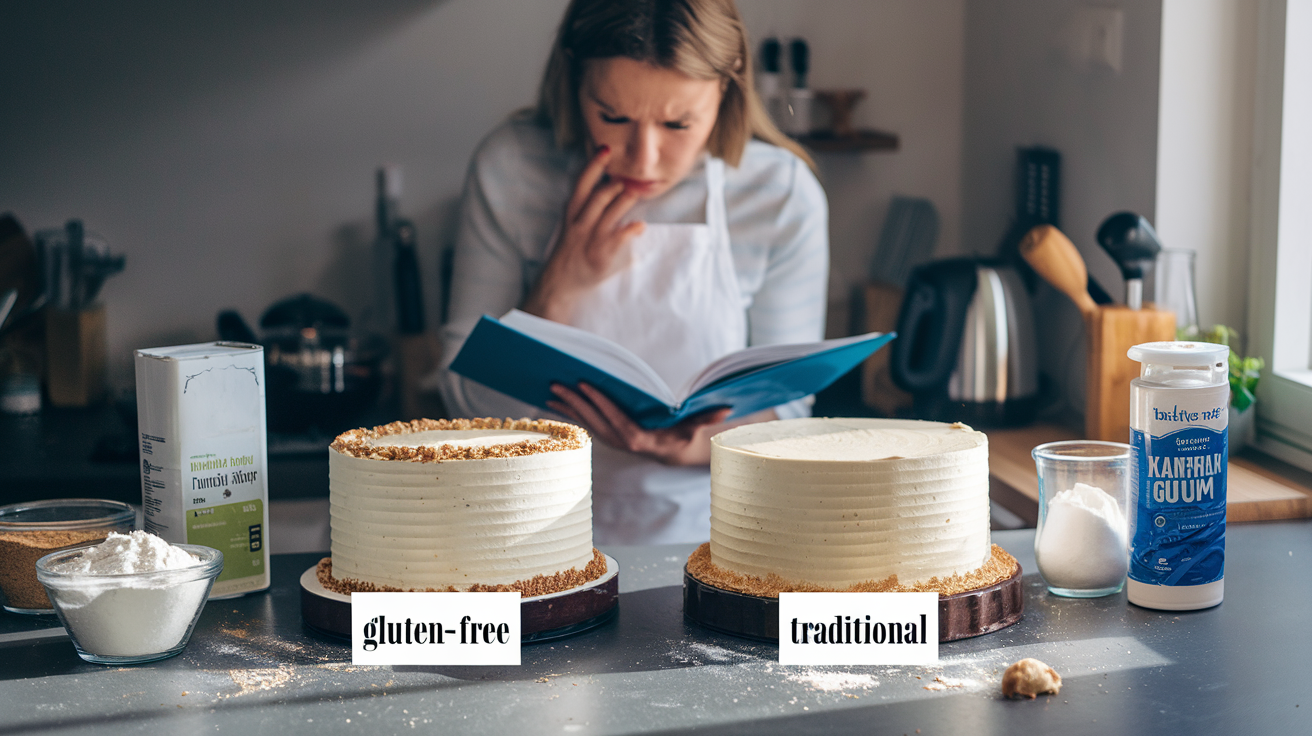
Gluten-free baking presents unique challenges that require careful consideration. One of the main hurdles is achieving the right texture and structure without gluten’s binding properties. Here are some common issues and solutions:
- Crumbly texture
- Dense or heavy cakes
- Dry or gritty mouthfeel
- Lack of rise
To overcome these challenges, experiment with different flour blends and use ingredients like xanthan gum or psyllium husk to improve structure. Adding extra moisture through ingredients like applesauce or yogurt can help combat dryness.
Achieving the perfect traditional cake
Creating a flawless traditional cake involves mastering several key techniques:
| Technique | Description |
|---|---|
| Creaming | Properly creaming butter and sugar for a light texture |
| Mixing | Alternating wet and dry ingredients to prevent overmixing |
| Baking | Ensuring even heat distribution for uniform rise |
Pay attention to ingredient temperature and quality for best results. Room temperature eggs and butter are essential for proper incorporation and texture.
Decorating techniques for both types
Whether working with gluten-free or traditional cakes, decorating techniques can elevate your creation:
- Fondant: Works well on both types, providing a smooth finish
- Buttercream: Versatile for piping and creating textures
- Ganache: Adds richness and shine to any cake
- Fresh fruits: Offer a natural, colorful decoration option
For gluten-free cakes, consider using a crumb coat to seal in loose crumbs before final frosting.
Storage and freshness tips
Proper storage is crucial for maintaining cake freshness. For both types:
- Cool completely before storing
- Wrap tightly in plastic wrap or place in an airtight container
- Store at room temperature for 2-3 days or refrigerate for up to a week
- Freeze unfrosted cakes for up to 3 months
Gluten-free cakes may dry out faster, so consider adding a simple syrup before frosting to lock in moisture. With these tips, you’ll be well-equipped to tackle both gluten-free and traditional cake baking challenges.
Accommodating Dietary Needs at Parties
Catering to mixed groups
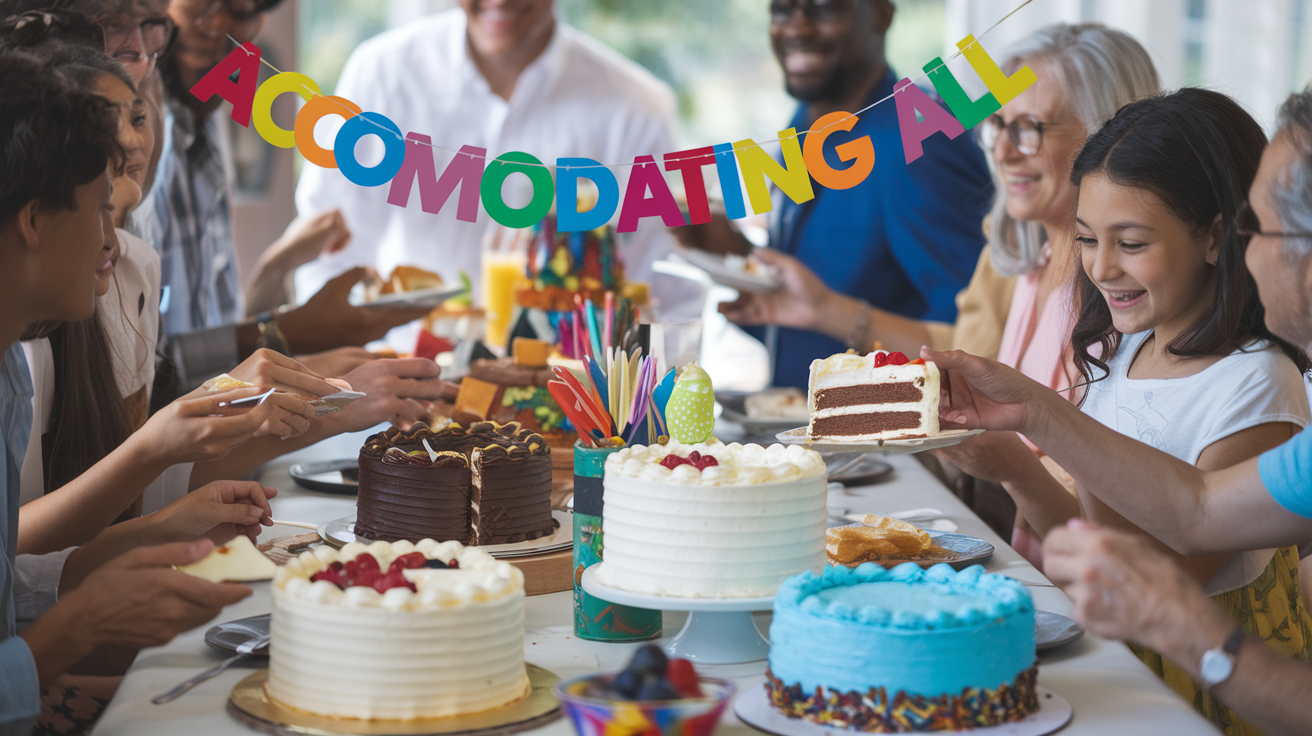
When hosting a birthday party, it’s essential to consider the diverse dietary needs of your guests. Here’s how you can accommodate both gluten-free and traditional cake lovers:
- Offer a variety of options
- Communicate with guests beforehand
- Use separate serving utensils
- Consider individual servings
| Cake Type | Advantages | Considerations |
|---|---|---|
| Gluten-Free | Suitable for celiac guests | May have different texture |
| Traditional | Familiar taste and texture | Not suitable for gluten-sensitive guests |
| Cupcakes | Easy individual servings | Allows for both options |
Labeling and avoiding cross-contamination
Proper labeling and preventing cross-contamination are crucial when serving both gluten-free and traditional cakes. Follow these steps:
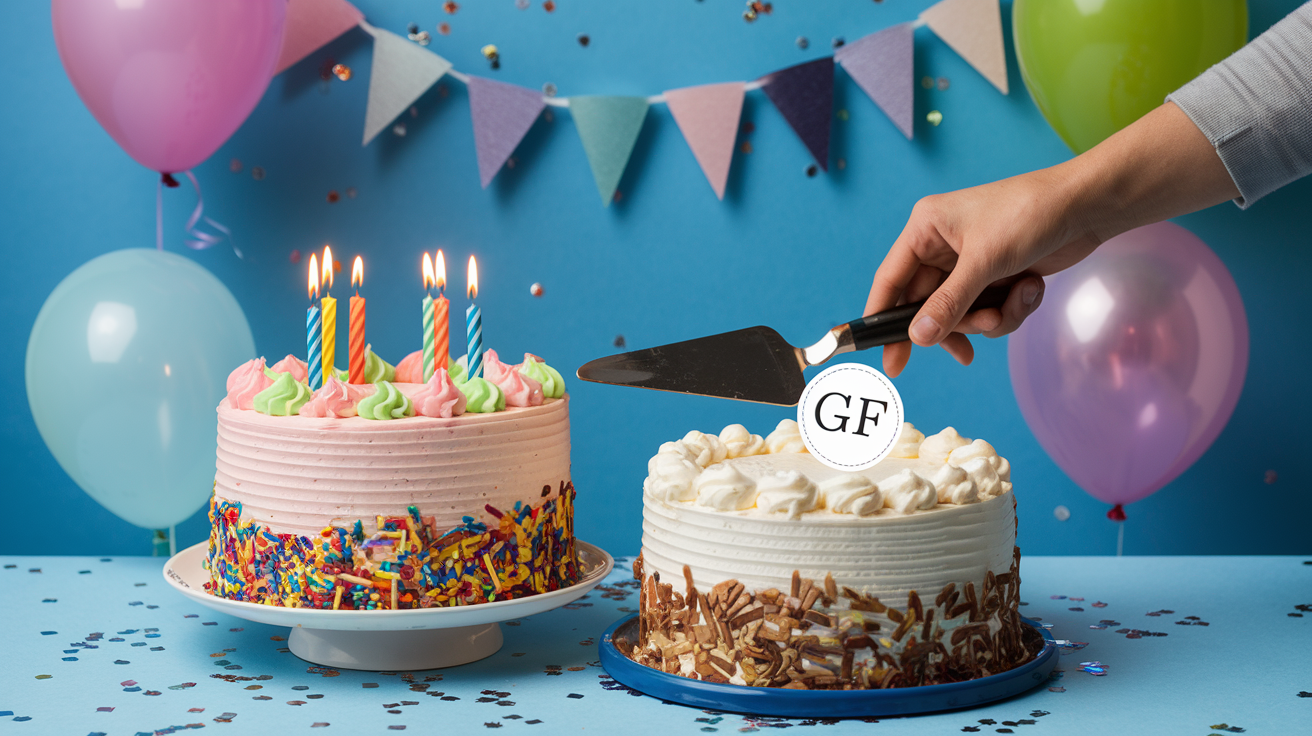
- Use clear, visible labels for each cake
- Keep gluten-free and traditional cakes on separate tables
- Use different serving utensils for each cake
- Train servers on the importance of avoiding cross-contamination
Creative alternatives to cake
For those looking to break away from traditional birthday cakes, consider these creative alternatives:
- Fruit platters arranged in cake shapes
- Ice cream sundae bars with various toppings
- Chocolate fountains with gluten-free dipping options
- Individual dessert cups (e.g., mousses, puddings)
These alternatives can cater to various dietary needs while still providing a festive centerpiece for the celebration. By offering a range of options, you ensure that all guests can participate in the birthday festivities, regardless of their dietary restrictions.
Making the Right Choice for Your Celebration
Consider your audience
When planning a birthday celebration, it’s crucial to consider your audience’s preferences and dietary needs. Here’s a quick guide to help you make the right choice:
| Audience Type | Recommended Cake Choice |
|---|---|
| Mixed group | Offer both options |
| Gluten-sensitive | Gluten-free cake |
| Traditional preferences | Classic cake |
| Health-conscious | Gluten-free (often healthier) |
- Survey guests in advance to gather dietary information
- Consider offering cupcakes for more variety and easier serving
Budget implications
The cost difference between gluten-free and traditional cakes can impact your decision:
- Gluten-free cakes often cost 20-30{9b4debaf71539559d24a99dfa2713bda5f3353fb2e9da8a05a5ae6b8140959ed} more
- Specialty ingredients increase production costs
- Smaller bakeries may charge premium prices for gluten-free options
Availability and accessibility
Availability can vary depending on your location:
- Urban areas: More options for both types
- Rural areas: Traditional cakes may be more readily available
- Online ordering: Expands options but may increase costs
Personalizing your cake selection
Tailor your cake choice to make the celebration truly special:
- Theme integration: Both cake types can be decorated to match party themes
- Flavor experimentation: Try unique flavors in either gluten-free or traditional versions
- Hybrid approach: Consider a tiered cake with both options
Remember, the perfect cake enhances the celebration while ensuring all guests can participate. Balance taste, dietary needs, and personal preferences to make an informed decision that will delight everyone at the party.
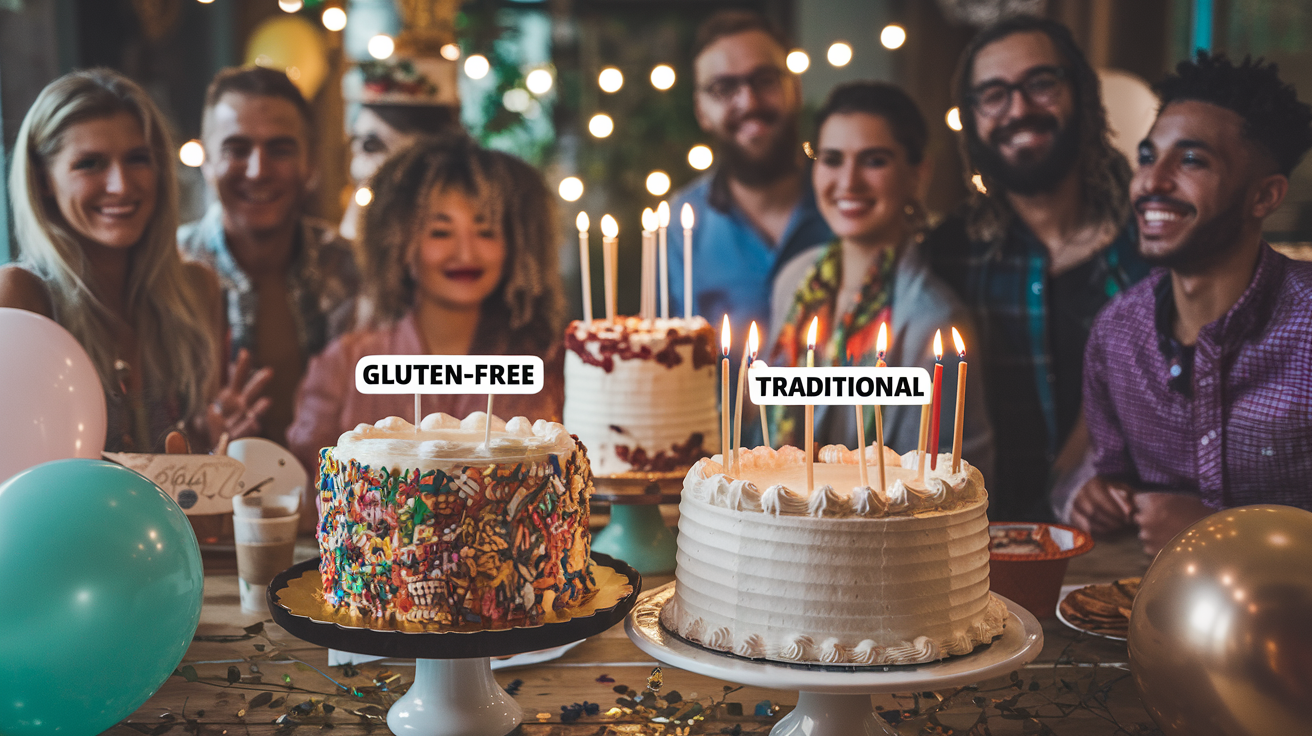
The battle between gluten-free and traditional birthday cakes boils down to personal preference and dietary needs. While traditional cakes offer a familiar taste and texture, gluten-free options have come a long way in replicating the beloved classic. Both types of cakes can be delicious, nutritious, and visually appealing when prepared with care and quality ingredients.
Ultimately, the supreme birthday cake is the one that brings joy to the celebration and meets the needs of all guests. Whether you choose gluten-free or traditional, focus on creating a memorable experience that everyone can enjoy. Remember, it’s not just about the cake itself, but the love and thought put into making the birthday celebration special for everyone involved.